Overcoming Myths: Private Practice, Motherhood, and Online Courses
What happens when two therapists, course creators, and longtime friends come together to discuss the importance of values, identifying your target audience, and embracing the trial and error of it all? A profound and heartfelt conversation unfolds.
Join host Kelley Stevens as she reflects with Sasha McPherson on their parallel career journeys, how they stay grounded as working moms, and what’s made the most difference as they evolve in their lives and careers. The enduring connection between host and guest allows for a candid and informative discussion – with some laughter in between!
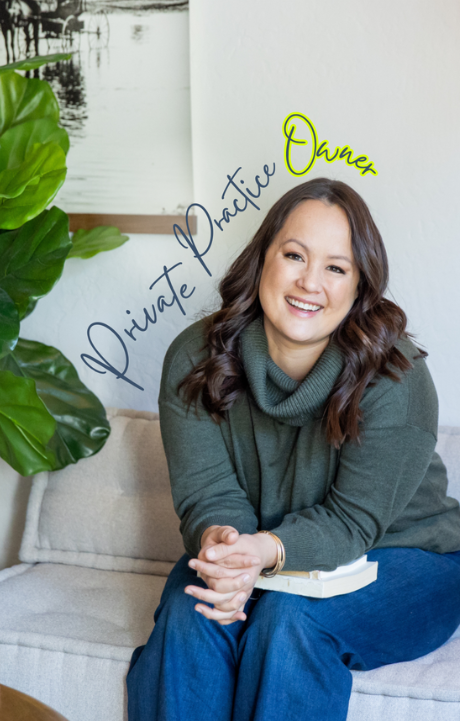
In this episode, I get the chance to record a conversation with my longtime friend and fellow private practice therapist, Sasha McPherson. Sasha is an LMFT in Westlake Village, California, and the co-creator of Thrive After Baby, a platform that aims to provide accessible, compassionate, and applicable support to new parents. In her practice, Sasha specializes in helping women struggling with anxiety and ADHD during the pregnancy, perinatal, and postpartum phases of motherhood.
Listeners will hear Sasha and me discuss our parallel career journeys, how we manage to stay grounded as working moms, and what has made the biggest difference as we evolve in our lives and careers. Sasha’s insight as a mental health provider, an entrepreneur, and someone with a huge heart makes this episode all that it is—and I could not be more excited to share it with you today!
Frequently Asked Questions
Can therapists build a private practice while raising children?
Yes. Therapists can build successful private practices while raising children, but the practice must support their real capacity. Flexible scheduling, clear boundaries, reliable childcare, efficient systems, and realistic income goals can make practice ownership more sustainable.
How can therapist moms balance private practice and motherhood?
Start by defining the hours you genuinely have available rather than building a schedule around an ideal week. Protect family time, limit administrative work outside business hours, automate repetitive tasks, and avoid accepting more clients than your energy can support.
Is private practice more flexible for working mothers?
Private practice can offer greater control over scheduling, caseload, fees, and time off. However, flexibility is not automatic. Without strong boundaries and systems, practice ownership can easily expand into evenings, weekends, and family time.
How many clients should a therapist mom see each week?
There is no universal number. The right caseload depends on financial goals, childcare, session intensity, administrative responsibilities, health, and family needs. Therapists should base their caseload on sustainable capacity rather than comparing themselves with other clinicians.
How can working moms stay grounded while growing a business?
Clarify your priorities, create routines that protect your energy, and decide what success means during your current season of life. Staying grounded often requires intentionally saying no to opportunities that conflict with your values or available capacity.
Can therapists create online courses as an additional income stream?
Yes. Therapists can create educational online courses when the content fits within their competence and follows applicable ethical, legal, and licensing requirements. Courses can diversify income, but they are not passive income machines that sell themselves while you nap.
What is the difference between an online course and therapy?
Therapy is an individualized clinical service involving assessment, treatment, professional responsibilities, and a therapeutic relationship. An online course usually provides general education and should clearly state that it is not therapy, diagnosis, crisis care, or a substitute for professional treatment.
How do therapists choose a topic for an online course?
Choose a specific problem your audience is actively trying to solve. The topic should connect your professional knowledge with a clear, practical outcome rather than attempting to cover everything you know.
How do I identify the target audience for an online course?
Define who the course is for, what they are struggling with, what they have already tried, and what result they want. A focused audience makes the content, marketing, and course structure much clearer.
Why is identifying a target audience important?
When you try to serve everyone, your message becomes vague. A clearly defined audience helps potential customers recognize that the course was created for their specific needs and circumstances.
How can therapists create accessible online courses?
Use clear language, practical examples, captions, transcripts, mobile-friendly materials, and flexible lesson formats. Pricing options, payment plans, and concise lessons can also make a course easier for busy parents and other learners to complete.
Do therapists need a large social media following to sell a course?
No. A smaller, engaged audience can be more valuable than a large audience that has little interest in the course topic. Strong positioning, trust, email marketing, professional relationships, and clear outcomes matter more than follower count alone.
How long does it take to create a successful online course?
The timeline varies based on the topic, course length, technology, existing audience, and marketing plan. Creating the lessons is only one part of the process. Testing the idea, launching it, gathering feedback, and improving it usually take longer than expected.
Should therapists create the full course before selling it?
Not always. Therapists can test demand through workshops, small groups, waitlists, interviews, or a live pilot program before investing months in a full course. Building first and checking demand later is an expensive way to discover that nobody asked for it.
What should therapists include in an online course disclaimer?
A disclaimer should explain that the course is educational and does not establish a therapist-client relationship. It should also clarify that the material is not medical advice, diagnosis, psychotherapy, or crisis support.
How can therapists protect client confidentiality when creating courses?
Do not share identifiable client information. Examples should be fictional, heavily generalized, or based on composite situations that cannot reasonably be connected to a particular person.
How can therapists avoid burnout while creating a course?
Set a realistic production schedule, reuse existing educational material where appropriate, limit the initial course scope, and avoid building every possible feature before launch. The first version needs to be useful, not enormous.
What if an online course does not sell well?
Poor sales do not automatically mean the idea is bad. Review the audience, problem, promise, pricing, messaging, and promotion. Course creation involves testing and revision, and the first launch often provides information rather than instant profit.
How do values influence private practice and course creation?
Values help therapists decide who they want to serve, how they want to work, what boundaries they need, and which opportunities deserve their time. A business aligned with personal values is easier to sustain than one built around trends or external expectations.
Can therapists be successful without doing everything perfectly?
Yes. Private practice and course creation both involve experimentation. Progress usually comes from testing ideas, learning from feedback, and making thoughtful adjustments rather than waiting for complete confidence or perfect conditions.

Sasha is a therapist and mom of two. Her practice focuses on supporting mothers and women to live the life they want. She specializes in perinatal mental health, anxiety, ADHD, and depression in women.