
How to Fill Your Therapy Caseload Without Insurance
Starting a private therapy practice can feel like stepping into the unknown, especially when you choose to operate without insurance. For many therapists, the fear of not having a full caseload can be paralyzing. But what if I told you that building a thriving practice without relying on insurance is not only possible, it is completely achievable?
Today, we are diving deep into strategies, tips, and real-world examples from therapists who have successfully grown their private practices. We will walk through everything from branding and online presence to community networking, all aimed at helping you fill your private practice caseload without insurance.
If you want a step-by-step guide for creating your first clients list, download our free guide here to get started today.
Why Choose a Private Practice Without Insurance
Many therapists wonder why anyone would choose to avoid insurance in private practice. There are several compelling reasons:
Higher session rates: Insurance often caps what therapists can charge, limiting income potential
More control over your schedule: You are not bound by insurance requirements or claim approvals
Freedom to focus on your niche: Without insurance constraints, you can tailor your services to your ideal client
Reduced administrative burden: Filing claims, waiting for reimbursements, and dealing with insurance paperwork can consume hours each week
Going off-insurance might seem intimidating at first, but it allows for a more sustainable and fulfilling private practice. With the right strategies, filling your caseload can happen faster than you think.
Starting Your Practice as an Associate
Many states, including Washington, allow therapists to run their own practices as associates. This means you can be a sole proprietor, work under supervision, and still have your own business name and brand.
Heather Thompson, a licensed clinical mental health counseling associate, shares:
“I am a sole proprietor and practice under a supervisor. I have my own office, my own business name, and my clients know me under that brand. I handle my own billing, and my supervisor is listed on the super bill for insurance purposes.”
Starting your practice as an associate does not limit your potential. It gives you a safety net while building credibility and allows you to practice independently.
If you are unsure how to start as an associate in your state, check out our free checklist for setting up a therapy practice as an associate here.
Understanding Your Billing and EHR
Even if you are not taking insurance, having a clear system for billing and record-keeping is crucial. Many private practitioners use electronic health record (EHR) systems like SimplePractice, which allow for:
Easy client scheduling and reminders
Secure telehealth sessions
Superbill generation for clients who want to seek insurance reimbursement on their own
By organizing your practice from day one, you can focus more on client care and less on administrative stress.
We also provide a step-by-step guide on setting up your SimplePractice account to make onboarding clients easier here.
Starting With Few Clients and Growing Steadily
When you first launch, it is normal to have only a handful of clients. Heather started with just two clients in her first month, but over the course of a year, she built a full caseload and a waitlist.
Key takeaways for starting small include:
Be patient: Growth takes time, especially without insurance referrals
Focus on your niche: Specializing in teen girls and women facing anxiety, depression, or life transitions helped Heather attract the right clients
Leverage your past experience: Working in community mental health beforehand gave her credibility and insight
Consistency, patience, and a clear niche are your foundation for sustainable growth.
If you want to map out your first 10 clients, download our private practice client planner here.
The Power of Psychology Today and Online Directories
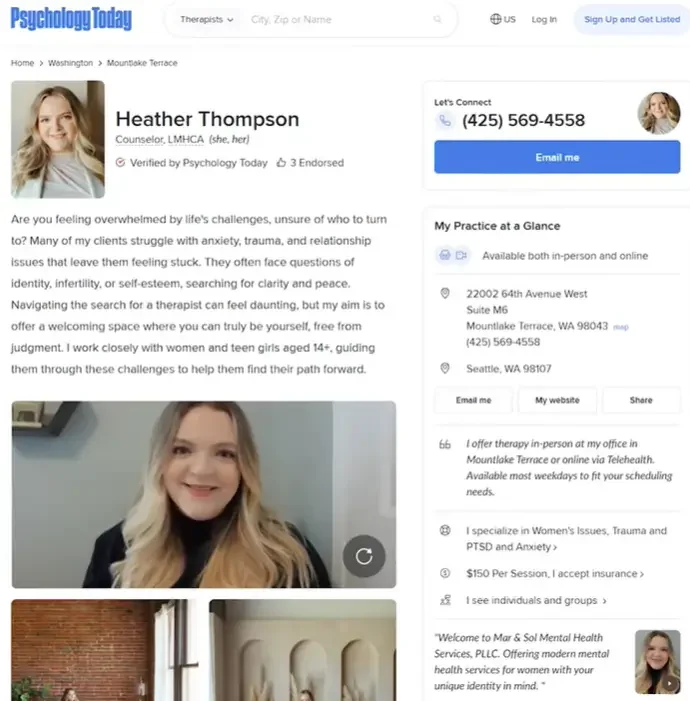
One of the most effective ways to get clients without insurance is creating a strong profile on Psychology Today, one of the highest-traffic therapist directories online.
Heather emphasizes:
“Psychology Today was my main referral source. I invested in great photos and messaging that aligned with my target audience. Later, I added a video to my profile, which increased visibility significantly.”
Tips for optimizing your online directory profile include:
High-quality photos: Clients want to feel a sense of connection before meeting you
Niche-focused messaging: Clearly state who you help and how
Video introduction: Videos can double your visibility on platforms like Psychology Today
Transparent pricing: Listing your session fee, for example $150 for 60 minutes, signals professionalism and builds trust
Directories are not just a place to be listed. They are a critical tool to attract the clients who are already searching for your services.
We also offer a free guide to creating a Psychology Today profile that books clients fast here.
Building a Compelling Website
A strong website is non-negotiable for filling your caseload without insurance. Your website is often the first point of contact for potential clients, and it should clearly communicate:
Who you help
What you specialize in
Your therapy approach
How clients can schedule sessions
Heather DIY-ed her website and spent time studying the websites of therapists she admired. She focused heavily on messaging, asking herself:
“What about these websites do I really like? How can I integrate that into mine?”
Pro tip: Include SEO-optimized content that naturally incorporates keywords like:
“Therapist for teen girls in [City]”
“Private therapy practice without insurance”
“EMDR therapy for trauma recovery”
This ensures your website shows up in search results when clients are looking for someone like you.
Networking in Your Community

Online presence alone is not enough. In-person connections remain a powerful strategy for growing a private practice without insurance. Heather shared how she hosted community events and partnered with local businesses to reach her target audience.
Examples of community partnerships include:
Local gyms catering to women
Play cafes for parents and caregivers
Wellness centers and yoga studios
These partnerships allow you to meet potential clients organically and build your reputation locally. Hosting workshops or talks also positions you as an expert in your niche, encouraging attendees to book sessions with you.
We have a free guide for creating community events that attract clients here.
Refining Your Psychology Today Profile Over Time
It is important to remember that your profile and messaging are living documents. They should evolve as your practice grows. Heather highlights:
Regular updates: Refresh photos, video introductions, and service descriptions
Feedback loops: Ask clients or peers what resonates with them about your profile
Adjusting for visibility: Psychology Today’s video section can boost your exposure to potential clients
Small adjustments over time can lead to a significant increase in inquiries and booked sessions.
Pricing Your Services Without Insurance
Pricing your sessions fairly is critical for maintaining a sustainable private practice. When setting fees without insurance:
Consider your target market and local rates
Be transparent on your website and directory listings
Offer a clear explanation of session length, cancellation policies, and payment methods
Heather currently charges $150 per 60-minute session, which is competitive for her area and allows her to maintain a thriving practice without insurance hassles.
Using Your Website to Convert Visitors into Clients
Simply having a website is not enough. You need to convert visitors into actual clients. Key strategies include:
Clear calls-to-action like “Book a Session” or “Contact Me Today”
Easy-to-navigate forms
Testimonials (with consent) to build trust
Blog posts or resources that reflect your expertise
Heather notes that many clients referenced her website’s content as the turning point that led them to reach out. This shows that strategic website messaging can directly impact your caseload growth.
Hosting Events as a Marketing Strategy
Hosting in-person or virtual events can feel intimidating, but they are incredibly effective for non-insurance practices. Heather’s superpower lies in this strategy. She hosted workshops, partnered with gyms, and connected directly with her community.
Benefits of hosting events include:
Builds local recognition
Allows potential clients to experience your approach first-hand
Creates opportunities for word-of-mouth referrals
Aligns you with other respected community businesses
Even a small event can generate new clients if executed thoughtfully.
Key Takeaways for Filling Your Caseload Without Insurance
Niche matters: Focus on a clear target audience and therapy specialty
Invest in your online presence: Psychology Today profile, website, and social media are your digital storefronts
Community engagement works: Networking and hosting events are powerful tools
Pricing and transparency are crucial: Clients value honesty and clarity when paying out-of-pocket
Consistency is everything: Growing your practice takes time, but strategic, steady effort yields results
Heather’s journey from two clients to a full caseload within a year shows that with persistence, creativity, and smart marketing, you can thrive without insurance.
Conclusion
Filling your therapy caseload without insurance is a realistic goal if you approach it strategically. From establishing your niche and perfecting your online presence to networking in your community and hosting events, every step matters.
Remember, it is not about luck. It is about consistent, intentional action. By investing in your branding, website, and local connections, you can grow a thriving private practice that allows you to focus on what matters most: helping clients.
For a full step-by-step roadmap to fill your caseload in your first year, download our Free Private Practice Starter Kit here.
FAQs
1. Can I really have a successful therapy practice without insurance?
Yes. Many therapists thrive off-insurance by focusing on a niche, building an online presence, and networking in their communities.
2. How important is a Psychology Today profile?
Extremely important. It is one of the top directories clients use to find therapists and can be a primary source of referrals.
3. How do I price my services if I am not taking insurance?
Research local rates, consider your experience, and be transparent with clients about your fees. Typical ranges are $120–$200 per session.
4. Do I need to host events to grow my practice?
While not mandatory, hosting events or workshops is a highly effective way to meet potential clients and increase visibility.
5. How can I make my website more effective at attracting clients?
Focus on clear messaging, SEO-optimized content, easy navigation, calls-to-action, and client testimonials to convert visitors into clients.