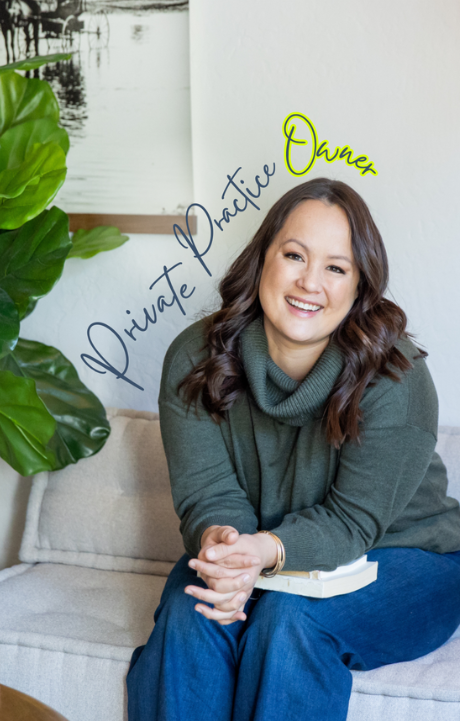
I still remember the first few videos I posted on Instagram.
They were awkward.
Not charming, awkward. More like, “Should I delete my whole account and move to a cabin?” Awkward.
And still, those early posts taught me something I wish more therapists knew. Instagram does not have to turn you into an influencer. It can simply become one more place where people understand who you help, how you think, and what it might feel like to work with you.
That is the whole point.
Instagram for therapists is not about performing. It is about clarity. It is about showing up in a way that feels ethical, grounded, and connected to the actual work you do.
And when it sits inside a bigger private practice marketing plan, it can help the right people find their next step.
Is Instagram Worth It for Therapists?
Instagram is worth considering because social media is where a lot of people already spend time. DataReportal reported that there were 5.79 billion social media user identities worldwide at the start of April 2026, and the same report notes that more than 2 in 3 people on Earth use social media each month.
That does not mean Instagram should become your entire marketing plan.
Please do not build your whole practice on one rented platform. That is how therapists end up spiraling because a post flopped on a Tuesday.
Instagram can help people get familiar with your voice. It can help potential clients, referral sources, and colleagues understand what you do. It can make your work feel less abstract.
But Instagram should work alongside your website, Google Business Profile, Psychology Today profile, referral relationships, blog content, and email list.
That balance matters because DataReportal’s Digital 2026 Global Overview Report says social media ads are the third most important source of brand awareness for adult internet users, after search engines and TV ads.
So yes, Instagram can help.
But no, Instagram is not the whole plan.
The therapist version of success is not “go viral.” It is this. Someone lands on your profile and thinks, “Oh. This person gets what I’m dealing with.”
The Biggest Mistake Therapists Make on Instagram
The biggest mistake is posting without a clear message.
A therapist will post one graphic about anxiety, one Reel about boundaries, one quote about burnout, one picture of their office, and one caption about self-care.
None of it is bad.
But none of it tells the viewer who the therapist helps.
That is where Instagram gets messy.
If your content is trying to speak to everyone, it usually lands with no one. A potential client does not need to know that you are generally nice and generally qualified. They need to know whether you understand their specific pain.
For example, “I help adults with anxiety” is a start.
But “I help high-achieving adults who look calm on the outside but feel like their brain never clocks out” gives someone a clearer place to land.
That is what your Instagram content should do.
It should make your niche easier to understand.
Not because you need to box yourself in.
But because clarity helps the right people recognize themselves.
How to Set Up an Instagram Profile That Makes Sense
Your profile should answer three simple questions.
Who do you help?
What do you help them with?
What should they do next?
Start with your name field. This is one of the most practical places to include searchable words. Instead of only using your name, you might use “Anxiety Therapist,” “Couples Therapist,” “Trauma Therapist,” “Parent Therapist,” or another phrase that reflects your niche.
Your bio should be just as clear.
A strong therapist bio usually includes who you support, what they are struggling with, and the next step they can take. It does not need to sound clever. Clever often loses to clear, and clear pays the rent.
Here is what that can look like.
“I help anxious adults feel steadier in relationships, work, and daily life. Online therapy available. Start with a consultation.”
That bio is not trying to be cute.
It is doing its job.
Your link should take people somewhere useful. For most therapists, that means a website, consultation page, contact page, free resource, or email list. If you want a simple example of a clear next step, The Private Practice Pro contact page gives readers a direct place to reach out.
Your pinned posts can also do a lot of quiet work.
Pin one post that explains who you help.
Pin one post that explains what therapy with you feels like.
Pin one post that answers a common question your ideal client asks before booking.
That way, when someone lands on your profile, they are not wandering around like they accidentally walked into the wrong waiting room.
What Therapists Should Post on Instagram
Therapists do not need endless content ideas.
They need a few repeatable categories.
Start with educational posts. These can explain common therapy questions, such as what anxiety can look like, what to expect in a first session, how trauma reminders may show up, or why relationship patterns repeat.
Then use reassurance posts. These posts help people feel seen without diagnosing them in the caption. You are not saying, “You have this condition.” You are saying, “This is something many people experience, and therapy can be a place to understand it.”
Use behind-the-scenes content carefully. You can show your office, your favorite therapy books, your values, your schedule reminders, or the way you think about care. You do not need to share your private life to seem human.
Use referral-friendly posts too. These are posts that help other professionals understand when to send someone your way. A school counselor, physician, doula, attorney, dietitian, or therapist colleague may need a simple explanation of who is a good fit for your practice.
And use resource posts. Link to a blog, free guide, newsletter, or contact page. The goal is not to keep someone scrolling forever. The goal is to help them take the next good step.
This is also where The Private Practice Pro resources can fit naturally. If a therapist wants practical support with content ideas, The Private Practice Pro store is a helpful place to find tools built for therapists who want support without making marketing their second full-time job.
Instagram Reels for Therapists
Reels can help your content reach people who do not already follow you. Instagram’s Help Center explains that Reels are short videos that can be created, edited, and shared with followers.
For therapists, the best Reels are usually simple.
One idea.
One clear opening line.
One practical takeaway.
One next step.
That is it.
You do not need a trending dance. You do not need a ring light that looks like it belongs in a spaceship. You need a clear point.
Try openings like these.
“If your Psychology Today profile is not bringing in calls, look at this first.”
“Most therapists make Instagram harder than it needs to be.”
“You do not need to post every day to build trust.”
“If you are scared to niche down, this is what I would remember.”
“Your Instagram bio may be confusing the exact people you want to help.”
These hooks work because they start with the thing the viewer cares about.
Reels should also be careful with clinical language. Avoid diagnosing the viewer. Avoid promising outcomes. Avoid turning painful experiences into trendy content.
The best therapist content feels like a steady hand on the table.
Not a performance.
Captions That Help People Take the Next Step
A caption should not repeat the reel word for word.
The reel gets attention.
The caption builds trust.
A helpful caption can add the story behind the Reel, one practical example, and one next step.
For therapists using ManyChat, the caption can also invite people to comment with a keyword so they receive a resource by direct message. ManyChat’s help center explains that its Instagram Post and Reel Comments trigger can start an automation when a user comments on a post or Reel.
For example, a therapist educator might write this.
“Comment TEMPLATES, and I’ll send you 10 Instagram templates for therapists who want to post without staring at a blank Canva screen.”
That is clear.
It is useful.
It does not sound like a carnival barker got access to your professional account.
The middle of the caption should give context. Tell the reader why this matters. Share a small story. Name the mistake you see therapists making. Explain what you would do instead.
Then ask one real question.
Not “Thoughts? ”
That is lazy. Respectfully, it deserves to sit in caption jail.
Ask something someone can actually answer.
“What part of Instagram feels hardest right now? ”
“Are you clear on who your content is speaking to? ”
“Do you know what you want people to do after they read your posts? ”
That kind of question invites a real response.
Stories, Highlights, and Trust Building
Stories are useful because they feel lighter than feed posts.
They do not have to be perfect. They can be reminders, quick reflections, practice updates, blog links, polls, or resource shares.
Since Instagram Stories disappear after 24 hours, they can be a simple way to stay present without turning every thought into a polished post. Instagram’s app listing from Meta describes Stories and Notes as ways to share updates that disappear after 24 hours.
Highlights are different.
Highlights should hold the information people may need later.
Good therapist highlights can include Start Here, Services, About, FAQ, Free Resources, Blog, and Contact.
Keep client information out of both Stories and Highlights. This is not optional. It is the line.
The American Counseling Association’s Counseling Today archive quotes ethics expert David Kaplan saying that, for legal and ethical reasons, client information should never be posted on social media. The same article advises counselors to phrase posts so they do not describe an actual client. That guidance is a strong standard for therapists creating social content.
Use composites only with serious care.
Better yet, speak from patterns, themes, and your own teaching points instead of anything that sounds like a session recap.
Hashtags, Keywords, and Instagram Search
Hashtags are not magic.
They are labels.
The clearer work is using words your ideal client actually understands.
That means your name field, bio, captions, on-screen text, and spoken words in Reels should include plain language. Think anxiety therapy, couples counseling, trauma therapy, therapy for new moms, therapy for perfectionism, or support for burnout.
Instagram’s Help Center says professional accounts can use insights to learn more about account and content performance, so you can watch which topics are actually connecting instead of guessing forever.
Use hashtags as a small support, not the strategy.
A few relevant tags are fine.
But if the content itself is unclear, hashtags will not save it. That is like putting a welcome mat in front of a house with no address.
Ethical Instagram Marketing for Therapists
This is where therapists need to slow down.
Instagram can be useful, but it is still a public platform. That means privacy, boundaries, and consent matter.
If you are a HIPAA-covered entity, you need to understand how protected health information applies to marketing. HHS states that the HIPAA Privacy Rule usually requires written authorization before protected health information is used or disclosed for marketing, with limited exceptions.
That means no client stories.
No “details changed” posts that are still recognizable.
No screenshots of client messages without proper authorization and legal guidance.
No public comments that confirm someone is a client.
And no DMs that turn into therapy.
Your Instagram bio, captions, and messages should also make clear that your content is educational. It is not therapy. It is not crisis support. It is not a substitute for care with a licensed provider.
If someone messages you with private clinical details, move them to your proper intake process or crisis resources when needed. Instagram DMs are not a therapy room.
Therapists also need to be careful with testimonials, reviews, affiliate links, and paid partnerships. The FTC says endorsements on social media should make material connections obvious when there is a financial, employment, personal, or family relationship with a brand.
That applies if you recommend a tool and earn money from that recommendation.
It is not wrong to share tools you believe in.
But it does need to be clear.
ManyChat and Free Resources for Therapists
ManyChat can be helpful when you have a resource people want.
The flow is simple.
Someone comments a keyword on your post.
They receive an automatic DM.
The DM sends them the promised resource.
That resource can lead them to your email list, a guide, a course, or another next step.
ManyChat explains that comment automation can send a direct message to a user who leaves a comment on a post.
For therapists, the resource should be genuinely useful.
For The Private Practice Pro, that might be 10 Free Instagram Templates, Quick Tips to Fill Your Private Practice, the Website Guide, the Google My Business Guide, Newsletter Prompts, or a resource connected to marketing for therapists.
The message should sound warm.
Not robotic.
Not pushy.
Not “Congrats, lead captured.”
Please no. Nobody wants to be captured before coffee.
A better message sounds like this.
“Hi friend. Here is the resource you asked for. I hope it helps you feel a little clearer about what to post next.”
That is enough.
How Instagram Fits With Your Bigger Marketing Plan
Instagram works best when it has a job.
It is not your entire marketing department.
Instagram and Psychology Today can work together. Instagram helps people hear your voice. Psychology Today helps people compare fit and take action when your profile is written clearly.
Instagram and Google Business Profile can work together. Instagram shows warmth and perspective. Google Business Profile can help with local discovery, especially when someone is searching for a therapist near them.
Instagram and referral marketing can work together. Instagram gives referral sources an easy way to understand your niche. Referral relationships still need human follow-up, gratitude, and consistency.
Instagram and email can work together. Instagram is public and busy. Email is more direct. If social media goes down, changes its rules, or stops showing your posts, your email list still gives you a way to reach people.
Instagram and your website should work together too. Your website should answer the bigger questions. Whom do you help? What therapy looks like. How to get started. The Private Practice Pro Club page is a good example of giving readers a clear place to learn more when they want deeper support.
Think of Instagram as the front porch.
Your website is the house.
Your email list is the kitchen table where the real conversation keeps going.
A Simple Weekly Instagram Plan for Therapists
You do not need to post every day.
You need a plan you can repeat.
Here is a simple weekly rhythm.
Post one educational Reel that answers a common question.
Post one Reel or carousel that speaks to your niche.
Share stories two or three days per week.
Share one clear next step, such as a consultation page, blog, free guide, or email list.
Review what people saved, shared, clicked, or asked about.
This is manageable.
And manageable matters because therapists already have enough unpaid jobs hiding inside their jobs.
If you are building a private practice, you do not need another thing that makes you feel behind. You need a repeatable rhythm that helps people understand your work.
What to Track So You Know What Is Working
Do not only track likes.
Likes are nice.
They are not the whole story.
Instagram’s Help Center says creators can view insights for posts, Stories, Reels, and live videos to see performance and engagement.
For therapists, better metrics include profile visits, website clicks, consultation inquiries, saves, shares, replies, and referral conversations.
Saves often mean someone found the post useful.
Shares often mean someone thought another person needed it.
Website clicks mean someone wanted a next step.
Consultation inquiries mean your content and your path to booking are working together.
Also track patterns. Which topics keep coming up? Which posts bring people to your site? Which Reels lead to questions? Which CTAs actually get comments?
Then adjust without making it personal.
A quiet post is not a character flaw.
Sometimes the hook was unclear. Sometimes the topic was too broad. Sometimes the timing was off. Sometimes Instagram was just being Instagram, which is to say, emotionally unavailable.
Keep going.

Where The Private Practice Pro Can Help:
If Instagram feels confusing, it is not because you are bad at marketing.
Most therapists were trained to be clinicians, not content strategists.
That gap is exactly why The Private Practice Pro exists.
If you want help posting without staring at a blank screen, start with the 10 Free Instagram Templates when that resource is available.
If you want deeper support with messaging, niche clarity, Psychology Today, referral relationships, and social media, Marketing for Therapists is the kind of resource that helps you understand what to say and where to say it.
If you want support, structure, and community while you build,The Private Practice Club gives therapists a place to stop figuring everything out alone.
And if you are not ready for the club yet, that is completely okay.The Private Practice Pro store has individual resources you can use for the specific piece you need right now.
Private practice is not magic.
It is a series of steps.
Instagram can be one of them.
Final Takeaway
Instagram for therapists works best when it is clear, ethical, and connected to a bigger plan.
You do not need to become an influencer.
You do not need to post your whole life.
You do not need to chase every trend like your caseload depends on lip syncing to a trending audio clip.
You need to help the right people understand what you do, who you help, and what they can do next.
That is the quieter kind of marketing.
And for therapists, it is often the kind that works.
FAQs
Is Instagram good for therapists?
Instagram can be useful for therapists who want to build trust, explain their niche, and help potential clients or referral sources understand their work. It should not be the only marketing channel, especially sinceDataReportal reports that search engines remain one of the top sources of brand awareness for internet users.
How often should therapists post on Instagram?
A realistic schedule is usually better than an intense one. Many therapists can start with one or two posts per week, plus a few Stories, then useInstagram insights to see which content people save, share, click, or respond to.
Can therapists use Instagram ethically?
Yes, therapists can use Instagram ethically when they protect client privacy, keep clear boundaries, avoid clinical advice in DMs, and treat content as education rather than therapy.HHS guidance says written authorization is usually required beforeprotected health information is used or disclosed for marketing, so therapists should be careful with client stories, testimonials, screenshots, and public replies.
Should therapists use Reels?
Reels can be helpful because they give therapists a simple way to teach one clear idea in a short video.Instagram describes Reels as short videos that can be created, edited, and shared with followers, so therapists can use them for niche education, therapy myths, common questions, and practice updates.
What should therapists put in their Instagram bio?
A therapist bio should clearly say who the therapist helps, what the person is struggling with, and what the next step is. A strong bio might include a specialty, service format, and link to a consultation page, contact page, or free resource, such asThe Private Practice Pro's contact page.